Iran War Cost Hits $47 Billion: The Shocking Price America Is Paying
The US military’s Iran war bill has climbed to $47.1 billion, raising fresh questions about weapons supplies, taxpayer spending and the future of the conflict.
The financial cost of the war between the United States and Iran has surged to an estimated $47.1 billion, highlighting the enormous price of a conflict that continues to put pressure on America’s military resources and government budget.
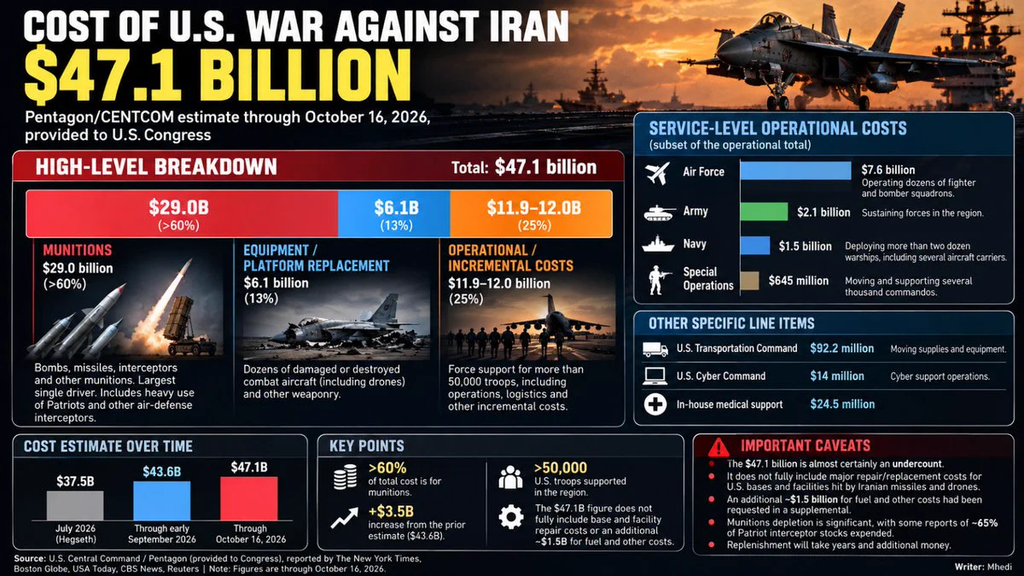
According to an updated US Central Command estimate provided to lawmakers, the military’s spending had reached $47.1 billion as of October 16, 2026. The latest figure represents a significant increase from the $43.6 billion estimate reported in September.
But the real cost could be even higher. The current estimate does not fully account for the expense of repairing US military bases across the Middle East that have been damaged by Iranian missile and drone attacks.
As the conflict enters another critical phase, the growing financial burden is intensifying scrutiny of Washington’s military strategy and the long-term consequences of continuing the war.
Where Is the $47.1 Billion Going?
Replacing weapons and ammunition accounts for the largest share of the military’s reported spending.
The latest estimate breaks down the costs into three major categories:
- Approximately $29 billion for munitions: This includes replacing bombs, missiles and air-defense interceptors used during the conflict.
- Around $6.1 billion for equipment replacement: The figure covers military equipment lost or damaged during operations.
- Approximately $11.9 billion in additional operating expenses: These costs include supporting deployed personnel and conducting military operations.
The figures illustrate how quickly the financial burden of modern warfare can grow. Advanced weapons systems, air-defense operations, aircraft deployments and logistical support can generate enormous expenses even when fighting becomes less intense.
The Pentagon has not publicly released a complete, independently verified accounting of every expense associated with the war.
Why the Iran War Bill Keeps Rising
The conflict began on February 28, 2026, when the United States and Israel launched military strikes against Iran.
US President Donald Trump initially indicated that the operation would be relatively short. However, the conflict has continued for months, increasing the costs associated with weapons replacement, personnel deployment and military operations.
The latest estimate is more than $9 billion above the $37.5 billion figure previously cited by Defense Secretary Pete Hegseth in July.
The continued expenditure of expensive precision-guided weapons and defensive interceptors has become a major factor behind the rising bill.
Military operations also require aircraft, naval vessels, transportation networks, communications systems and support personnel to remain operational across a vast region.
Even if the intensity of fighting declines, replacing weapons already used and repairing damaged equipment can leave the government facing substantial bills.
Weapons Shortages Raise Concerns About US Military Readiness
Beyond the financial cost, the war has raised concerns about the availability of critical weapons needed for other potential military emergencies.
The US military has used substantial quantities of missiles and other munitions during the conflict. Replenishing those supplies requires manufacturing capacity, specialized components and time.
That creates a strategic challenge for Washington: how to maintain its operations in the Middle East while ensuring sufficient weapons remain available for other regions, including the Indo-Pacific.
A September assessment by the Pentagon’s inspector general identified strategic inventory shortfalls and highlighted challenges affecting the defense supply chain.
The administration has disputed claims that the US military lacks adequate ammunition. Nevertheless, rebuilding stockpiles and accelerating production remain important issues as officials assess future military requirements.
The consequences could extend beyond the Iran conflict if replenishment takes longer than expected or other security crises emerge before supplies are restored.
Damaged Military Bases Could Push the Total Even Higher
The $47.1 billion estimate does not provide a complete picture of the war’s financial impact.
Iranian missile and drone attacks have damaged US military facilities across the Middle East, creating additional potential costs for repairs, reconstruction and restoring operational capabilities.
Those expenses could add billions of dollars to the final bill, although a comprehensive total has not yet been established.
The distinction is important because the cost of conducting military operations is not the same as the full cost of a war.
A more complete accounting would need to consider infrastructure repairs, future weapons procurement, equipment replacement and other expenses that may continue long after major combat operations end.
Until those costs are fully assessed, the latest estimate should be viewed as a measure of reported military spending rather than the definitive price of the entire conflict.
The Economic Impact Could Reach Beyond the Battlefield
The war’s consequences are not limited to military budgets.
Disruptions to energy markets and regional shipping have raised concerns about higher fuel prices, inflation and the broader global economic outlook.
Oil prices can respond sharply to uncertainty in the Middle East, particularly when shipping routes and energy infrastructure face potential threats.
Higher energy costs can increase transportation and manufacturing expenses, putting additional pressure on households and businesses.
For the US government, the financial challenge also includes determining how military operations will be funded. Additional defense spending may require difficult budget decisions and further congressional debate over priorities.
The broader economic impact will depend on the conflict’s duration, developments in regional security and whether energy supplies and shipping routes return to more stable conditions.
Could the United States Resume Major Military Operations?
The future of the conflict remains uncertain.
Trump has indicated that the United States could consider renewed military action if negotiations with Iran fail. Any escalation could increase spending on weapons, aircraft operations, air defense and military personnel.
The Congressional Budget Office previously estimated that US military operations could cost approximately $2 billion to $3 billion per month, depending on the circumstances and intensity of the conflict.
If those costs continue, the total could rise considerably beyond the latest reported figure.
A diplomatic agreement, meanwhile, could reduce future operational spending, although the United States would still face expenses associated with repairing facilities and replenishing depleted weapons stocks.
The decisions made in the coming weeks could therefore have major implications for military readiness, federal spending and regional stability.
A $47 Billion Question for Washington
The $47.1 billion estimate puts a stark figure on the financial consequences of the Iran war, but it does not settle the debate over the conflict’s overall cost or strategic value.
For lawmakers, the challenge is to scrutinize military spending while assessing the resources required to protect US forces and meet national security commitments.
For defense planners, the priority is to restore weapons inventories, address supply-chain constraints and prepare for potential future threats.
For the public, the central question is how long the United States can sustain the financial and military demands of the conflict—and what the eventual outcome will mean for the country.
With the cost continuing to climb and additional expenses still unaccounted for, the final price of the Iran war remains an open question.
The bottom line: The US military’s reported Iran war spending reached $47.1 billion by October 16, 2026. The total could rise further as Washington replaces expended weapons, repairs damaged facilities and decides whether to pursue diplomacy or renewed military action.
Reporting note: Figures in this article are based on reported US Central Command estimates and coverage by Reuters and CBS News published October 27–28, 2026.