Spain Train Crash Kills at Least 64 as Rescue Operations Continue
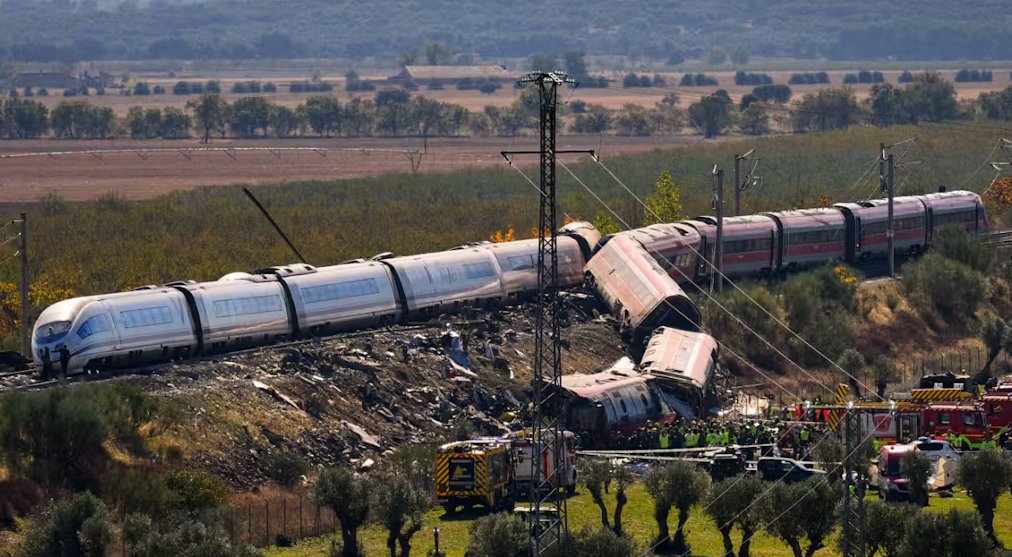
Spain is facing a major railway tragedy after two high-speed trains collided near Toledo, killing at least 64 people and injuring more than 100 others. Emergency crews are continuing rescue operations as investigators work to determine what caused the deadly crash.
A devastating train crash in central Spain has left dozens of people dead and many others injured after two high-speed trains collided near the town of Urda in the province of Toledo on Wednesday, October 28, 2026.
Regional authorities reported that at least 64 people had died, while the number of casualties could increase as rescue workers continue searching the wreckage for trapped passengers.
The accident occurred approximately 130 kilometres south of Madrid on a major railway route connecting the Spanish capital with southern parts of the country.
Two High-Speed Trains Involved in the Collision
The crash involved a train operated by private railway company Iryo and another operated by Spain’s state-owned rail company, Renfe.
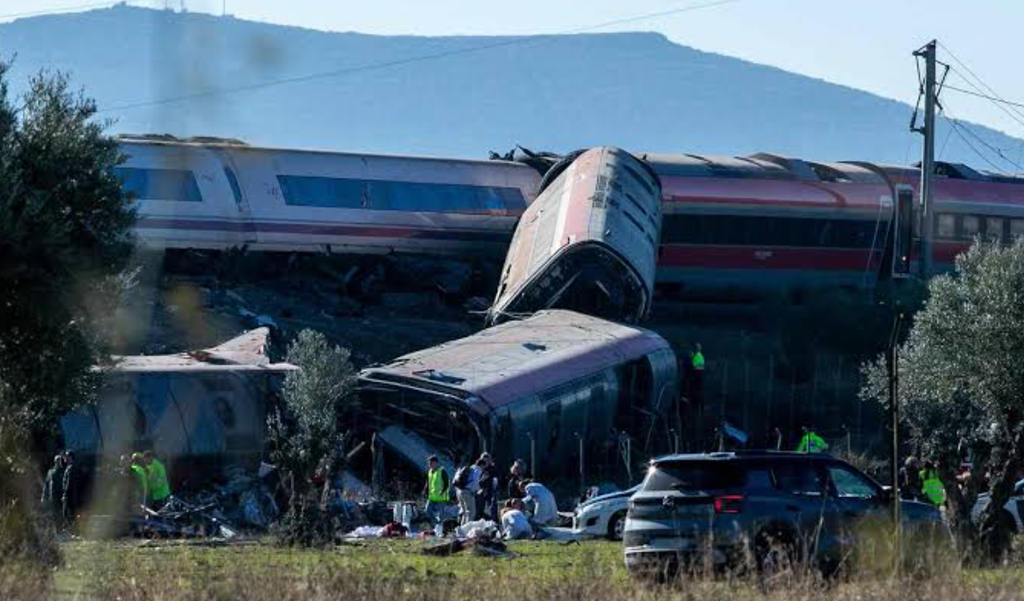
According to initial reports, the Iryo train had stopped on the tracks before the Renfe service struck it from behind. The impact caused several carriages to derail, with some plunging down an embankment.
Approximately 544 passengers were travelling on the two trains, according to regional officials. Emergency responders faced difficult conditions as they worked to reach injured passengers and inspect the damaged carriages.
The full circumstances surrounding the collision have not yet been established, and investigators are examining the sequence of events leading up to the crash.
Emergency Teams Race to Rescue Survivors
Firefighters, medical teams, civil protection personnel and other emergency workers were deployed to the scene to assist victims and search the wreckage.
Ambulances and medical helicopters helped transport injured passengers to hospitals, while temporary treatment facilities were established near the crash site.
Authorities warned that additional victims could be found because rescuers had not yet been able to access every damaged carriage.
Hospitals also appealed for blood donations as medical teams prepared to treat the injured. The scale of the disaster prompted a substantial emergency response involving personnel from surrounding communities.
Survivors described scenes of confusion, screaming and serious injuries following the collision. Passengers who managed to escape were helped away from the wreckage as emergency workers continued their operations.
Cause of the Spain Train Crash Remains Under Investigation
The cause of the collision remains unclear, with railway authorities and investigators working to reconstruct what happened.
Early media reports raised questions about railway signalling and whether the Renfe train had been authorised to proceed. However, these reports have not established a definitive cause, and no final investigative conclusions have been announced.
Investigators will need to examine signalling records, train movements, communications between railway control centres and other technical evidence before determining responsibility.
The findings will be important in establishing how a collision between two trains on Spain’s high-speed network could have occurred.
Railway Safety Under Renewed Scrutiny
The tragedy has renewed concerns about railway safety in Spain, which experienced another deadly train disaster earlier in 2026.
In January, a collision involving high-speed trains near Adamuz in Córdoba province killed 46 people and injured more than 150 others.
The latest crash is likely to intensify questions about railway infrastructure, safety systems and operational procedures. However, experts have cautioned against drawing conclusions about the cause before the investigation is complete.
Spain operates an extensive high-speed railway network that connects major cities and carries millions of passengers. The results of the investigation could have important implications for railway safety and public confidence in the country’s rail services.
Government and European Leaders Express Condolences
Spanish Prime Minister Pedro Sánchez expressed shock over the latest disaster and offered support to the victims and their families.
European leaders also conveyed their condolences, while the European Union indicated its readiness to support Spanish authorities if necessary.
As rescue operations continue, officials are working to identify victims, provide assistance to survivors and inform families about their relatives.
Investigation and Rescue Efforts Continue
The priority remains reaching any passengers who may still be trapped, treating the injured and determining the full number of casualties.
Investigators will also seek to establish why the collision occurred and whether any failures in railway operations or safety procedures contributed to the disaster.
With the death toll already reaching at least 64, the crash stands as one of Spain’s most serious recent railway tragedies.
Authorities are expected to provide further updates as rescue teams make progress and more information becomes available.
This is a developing story. Casualty figures and details about the cause of the crash may change as official investigations continue.